Welding a flange to a pipe is a fundamental skill in industrial piping. The goal is to create a permanent, pressure-tight, and strong connection. The method you use depends heavily on the type of flange. Doing it wrong can lead to leaks or joint failure.
This guide explains the common methods and the key steps for a successful weld.
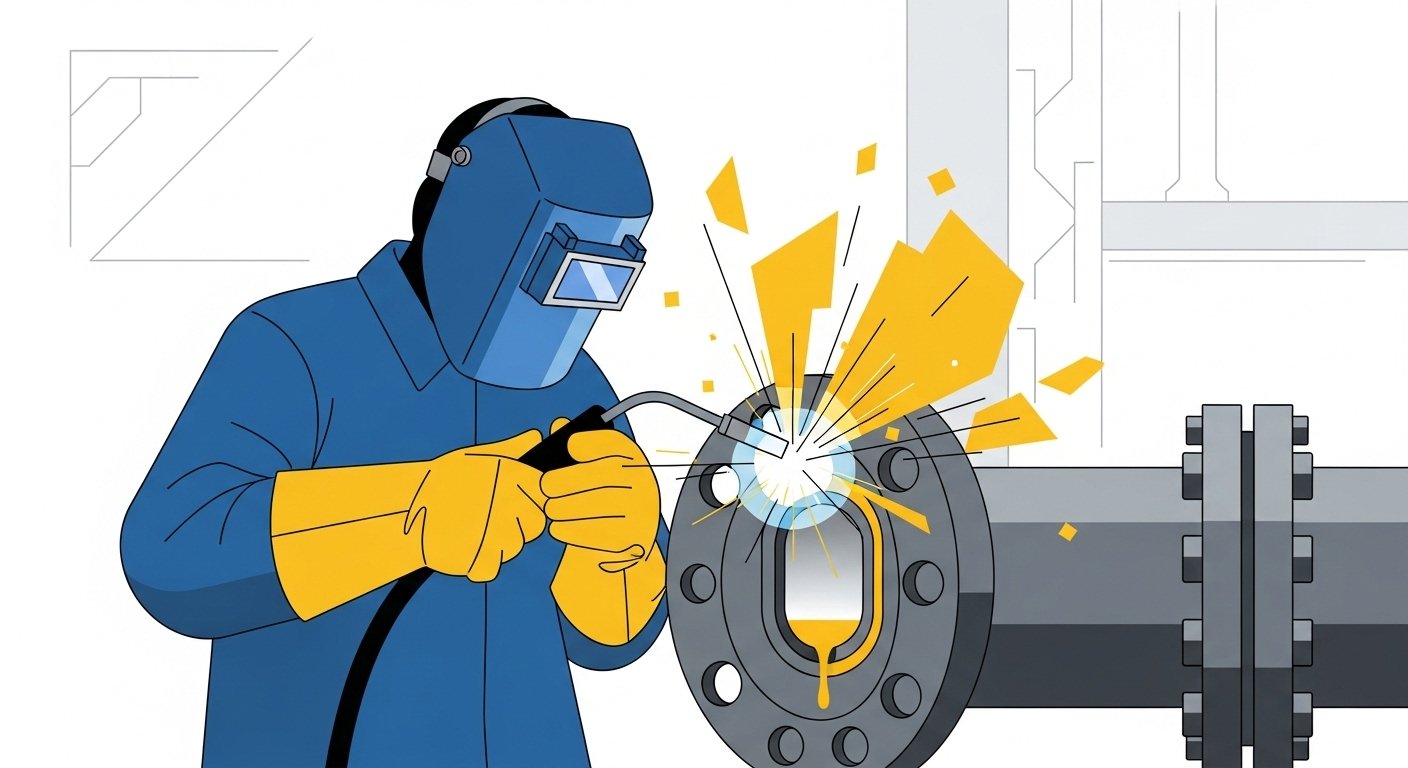
Two Main Welding Methods: Weld Neck vs. Slip-On
The flange type dictates the welding procedure. Here is how the two most common types differ.
| Feature | Weld Neck Flange (Butt Weld) | Slip-On Flange (Fillet Weld) |
| Connection Type | Butt weld. The flange neck and pipe end are beveled and aligned. | Fillet weld. The flange slides over the pipe. |
| Weld Location | A single weld around the neck of the flange. | Two welds: one inside the hub and one outside on the flange face. |
| Primary Strength | Very high. The weld is a full-penetration butt weld, as strong as the pipe itself. | Moderate. Relies on the strength of the fillet welds. Not for high cyclic stress. |
| Application | High pressure, high temperature, and critical services. | Lower pressure applications, general plant piping, easier alignment. |
| Key Advantage | Excellent stress distribution through the tapered hub. Best for fatigue resistance. | Lower cost and easier installation alignment. |
Step-by-Step Procedure
While details vary by flange type, these core principles apply to all flange welding.
1. Preparation is Critical
- Fit-Up: Ensure the pipe end is cut square. For a weld neck, the pipe must match the flange’s bore and bevel angle precisely.
- Cleaning: Remove all rust, oil, paint, and debris from the pipe end and the flange welding surface. Clean metal is essential.
- Alignment: For weld necks, ensure proper alignment with minimal gap. For slip-ons, set the pipe back from the flange face by the pipe wall thickness plus about 1/8 inch to allow for the internal weld.
2. Tack Welding and Final Alignment
- Secure the flange in place with small tack welds (usually 3 or 4, evenly spaced).
- Before final welding, check alignment. Bolt the flange to a mating flange or use a level to ensure the face is not tilted. Correct any misalignment now.
3. Welding Technique and Heat Control
- Control Heat Input: Use a “stitch welding” technique, especially for slip-on flanges. Weld a small section, then move to the opposite side. This prevents warping the flange face.
- Weld Size: Follow code requirements. For slip-on fillet welds, the leg size should be at least 1.4 times the pipe’s nominal wall thickness, or the hub thickness, whichever is smaller.
- Complete the Weld: For slip-on flanges, make the internal seal weld first, then the external structural weld.
4. Post-Weld Inspection
- Let the weld cool naturally. Do not quench it.
- Visually inspect for defects: cracks, porosity, or undercut.
- Remove any welding slag or spatter.
Choosing the Right Welding Process
| Process | Best For | Notes |
| SMAW (“Stick Welding”) | General purpose, all-position welding, including field work. | Versatile and common. Requires skill for consistent, high-quality welds on pipe. |
| GTAW (“TIG Welding”) | Root passes on critical welds, stainless steel, and thin materials. | Provides excellent control and clean welds. Often used for the first pass, followed by another process. |
| GMAW (“MIG Welding”) | Faster production welding in shop environments. | Good deposition rate. Less suitable for all-position field welding compared to SMAW. |
Frequently Asked Questions
Q: Why is a weld neck flange stronger than a slip-on?
A: The butt weld of a weld neck flange has a smooth transition that distributes stress evenly. The fillet welds of a slip-on flange create points of high stress concentration, making them more prone to fatigue failure under repeated bending or pressure cycles.
Q: Can I weld a carbon steel flange to a stainless steel pipe?
A: This requires special consideration. You need to use a welding electrode/filler metal compatible with both metals (like a 309 grade). There is also a risk of carbon migration and reduced corrosion resistance. It’s best to consult a welding procedure specification.
Q: What causes a flange weld to crack?
A: Common causes are poor fit-up (large gaps), rapid cooling, hydrogen in the weld (from damp electrodes or materials), or excessive restraint during welding that creates high stress.
Q: Is pre-heat necessary?
A: For thicker carbon steel sections or certain alloys, pre-heat is often required by welding codes. It slows the cooling rate, prevents hard, crack-prone microstructures, and helps hydrogen escape.
Q: What’s the biggest mistake beginners make?
A: Not checking alignment before final welding. A misaligned flange cannot be bolted up properly and will leak. Always align and tack weld first.
Conclusion
Welding a flange to a pipe requires the right method for the flange type, careful preparation, and controlled technique. The goal is a leak-proof joint that can handle the system’s pressure, temperature, and mechanical stress.
Need high-quality flanges for your next welding project, or have questions about material specifications and compatibility? Our team can provide the right components and technical data to ensure a successful installation.